
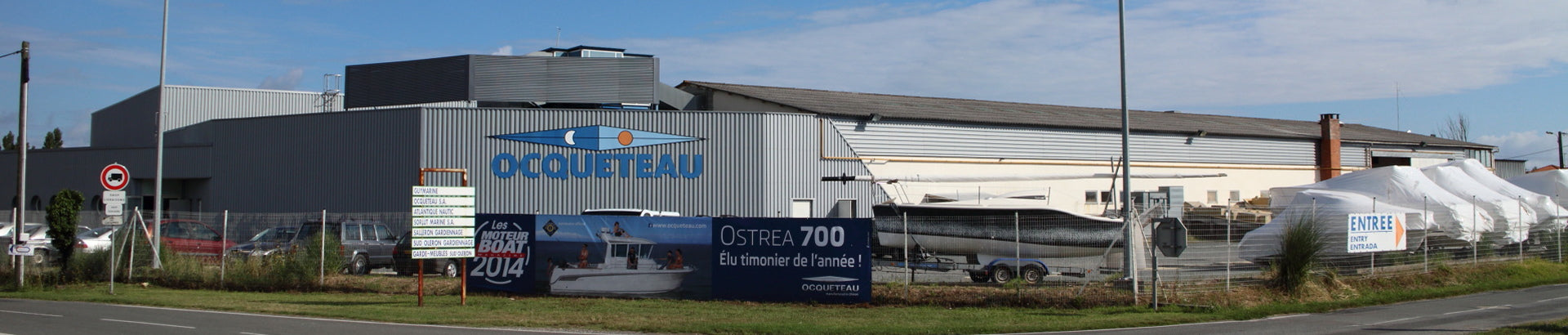

Founded in 1948 on the banks of the Ors channel on the île d'Oléron, by Guy Ocqueteau, the company is part of French boat building history.
For 70 years, Ocqueteau has been a recognised expert in Commercial and Recreational boatbuilding, renowned for the outstanding seakeeping performance qualities and durability of its boats.
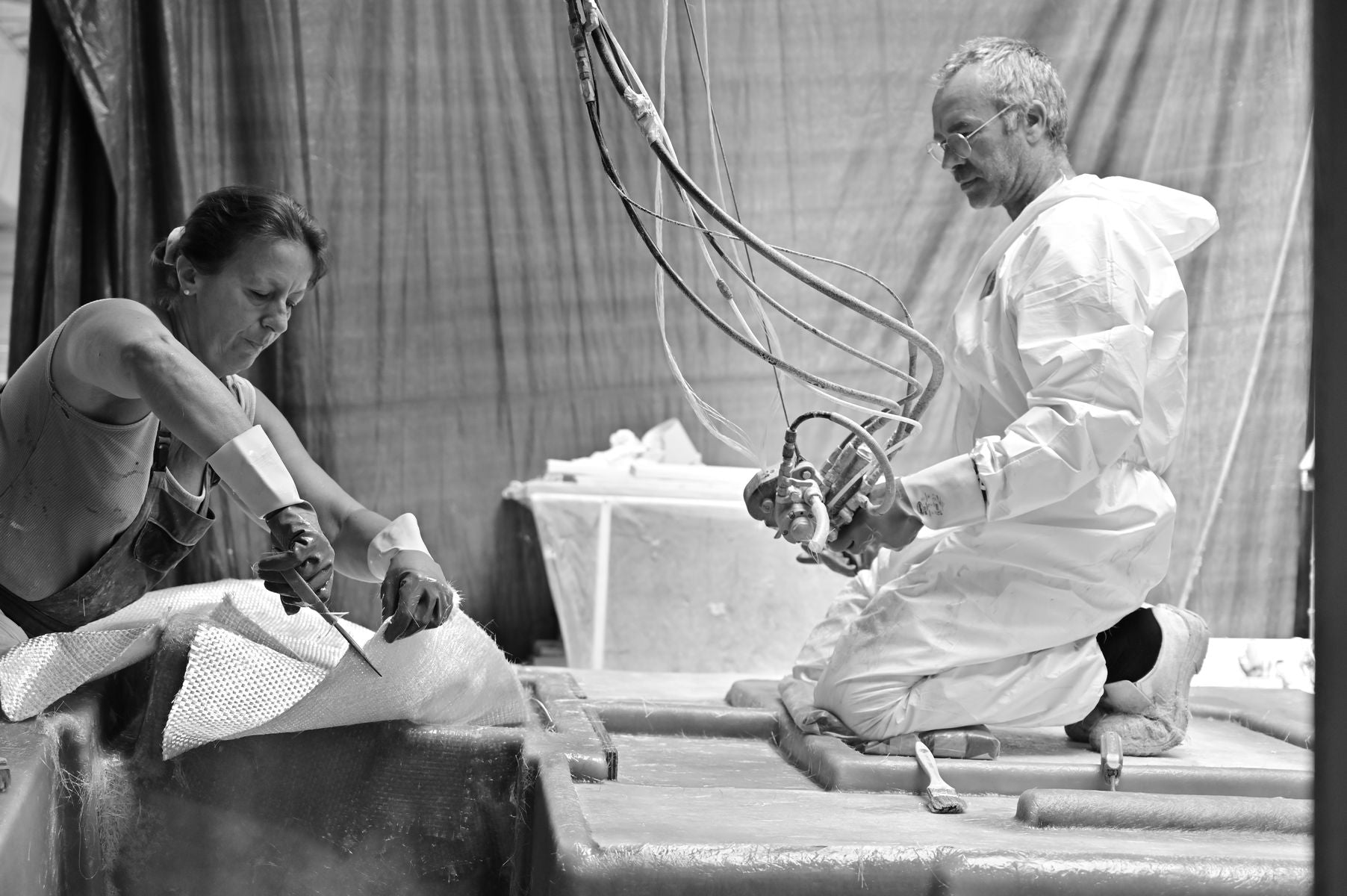
Decades of marine construction expertise
Having begun with the building of wooden Oyster fishing boats built for the rigours of the Atlantic through to becoming pioneers in the use of state of the art, vacuum resin infusion production methods still used in all Ocqueteau boats built today.
A process that significantly reduces resin consumption and pollutant emissions, meaning that hulls are 20-30% lighter than conventional wet lay construction with significant stiffness and durability advantages.
Renowned expertise
Hull construction is at the heart of the boat's DNA.
OCQUETEAU manufactures all its hulls in infusion to deliver stronger, lighter hulls.
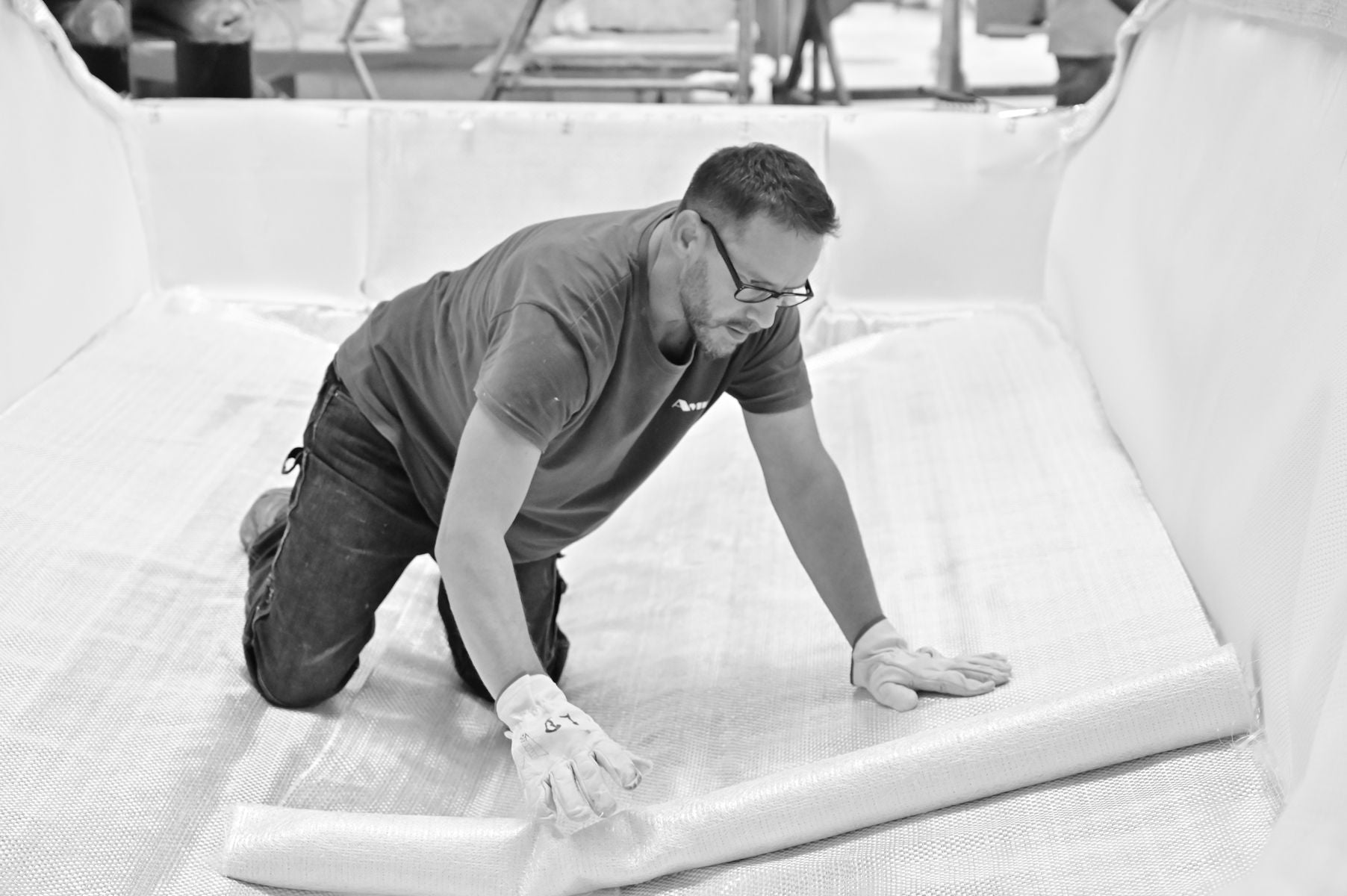
Ocqueteau Construction Method
The hull construction is made of a combination of fibreglass mat with balsa reinforcing cores and vacuum infused resin. This method delivers the lightest and strongest construction possible with total consistency in the lay up, something not possible in a traditional wet lay method.
The process begins with the application of gel coat to the mould after which glass fibre material is laid together with Balsa core reinforcement.
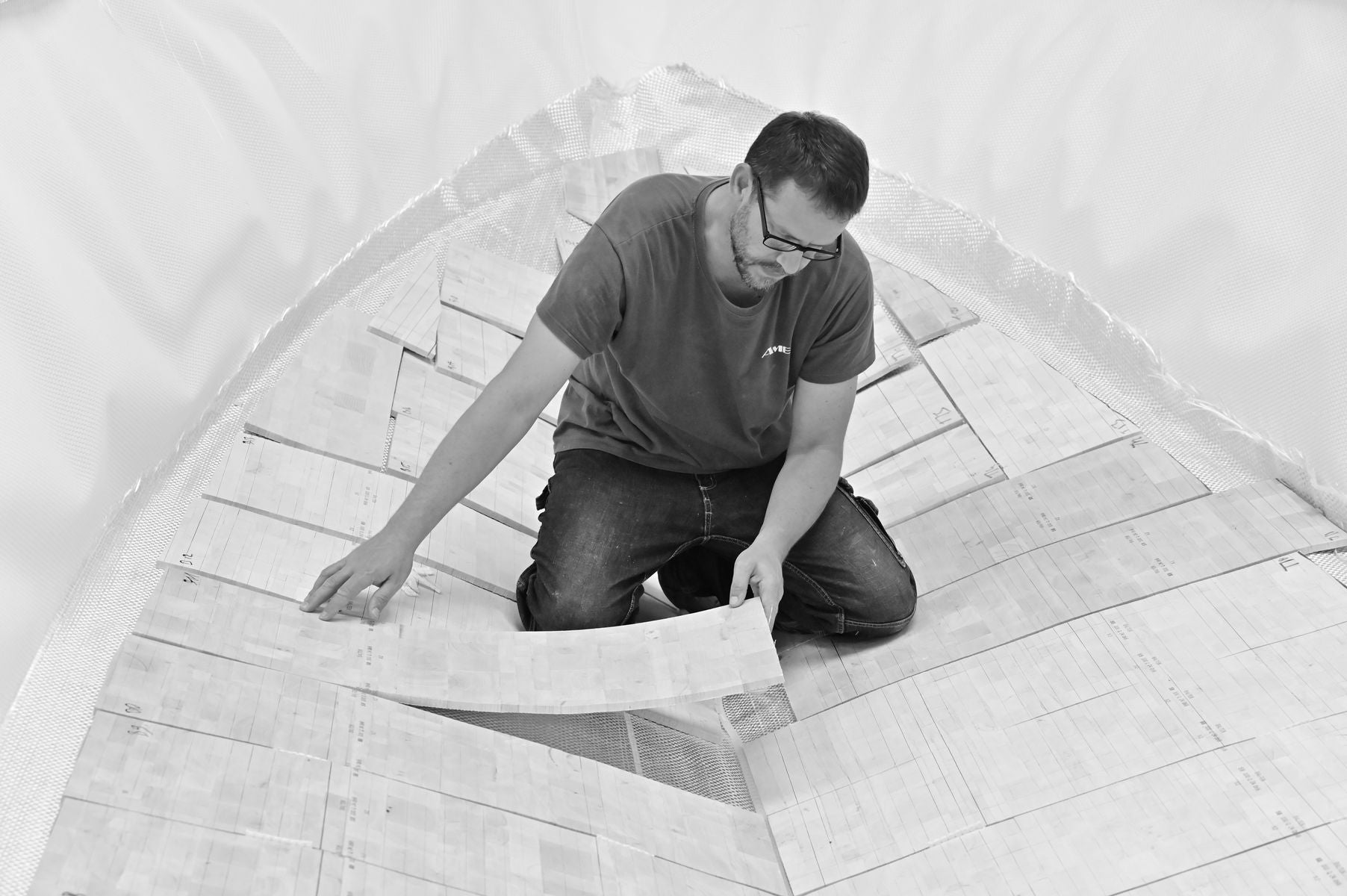
Balsa wood reinforcements
Balsa in the bottom of the hull increases rigidity without increasing weight.
Infusion-treated, each balsa square is independent and water-resistant.
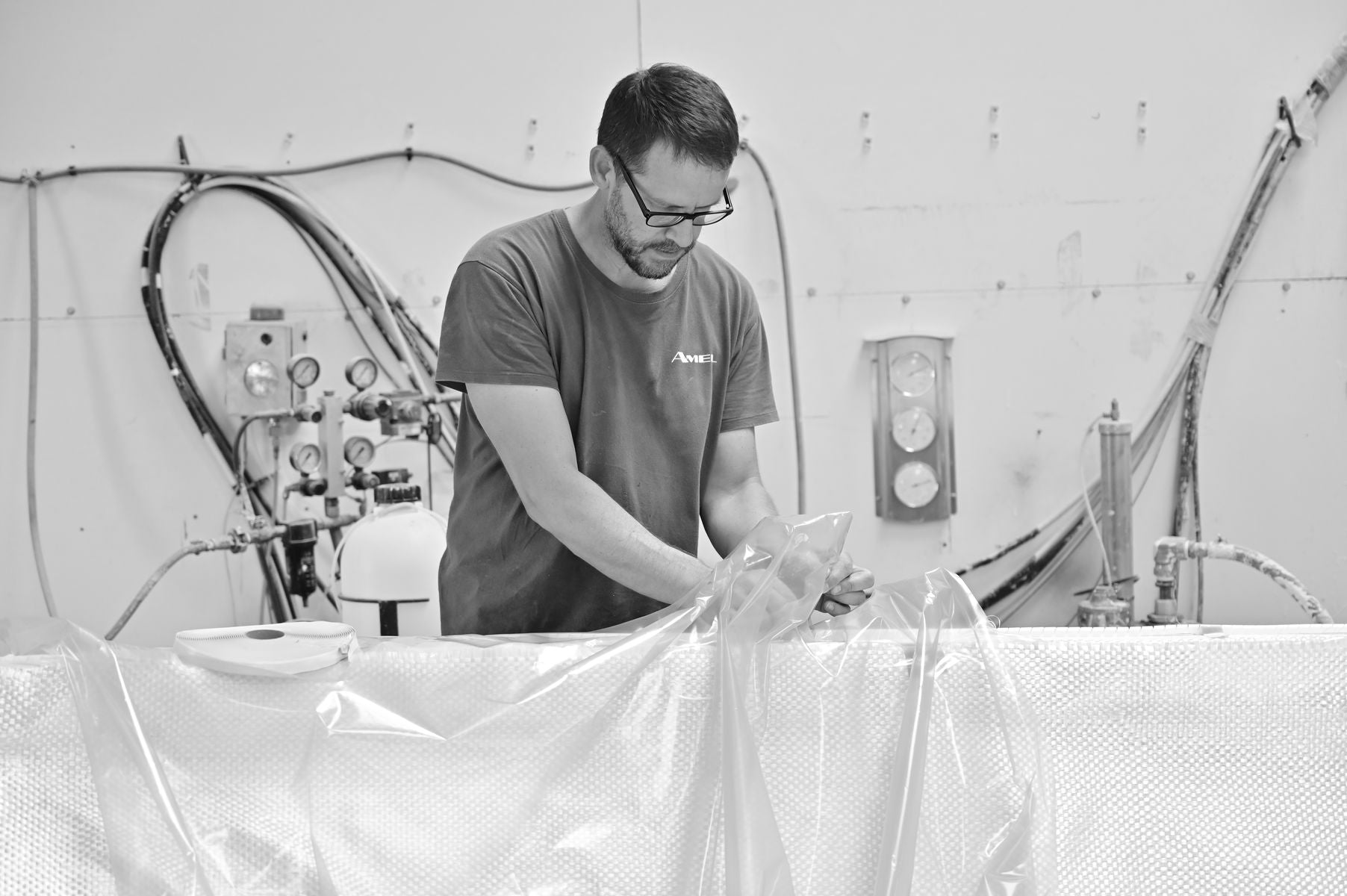
A plastic membrane is laid around the mould.
Vacuum infusion circulates resin evenly through the layers of fiberglass, balsa sandwich or honeycomb structure which has the advantage of strengthening hull without generating an increase in weight. After the resin has been infused, a vacuum is created and the whole structure is compressed under significant pressure.
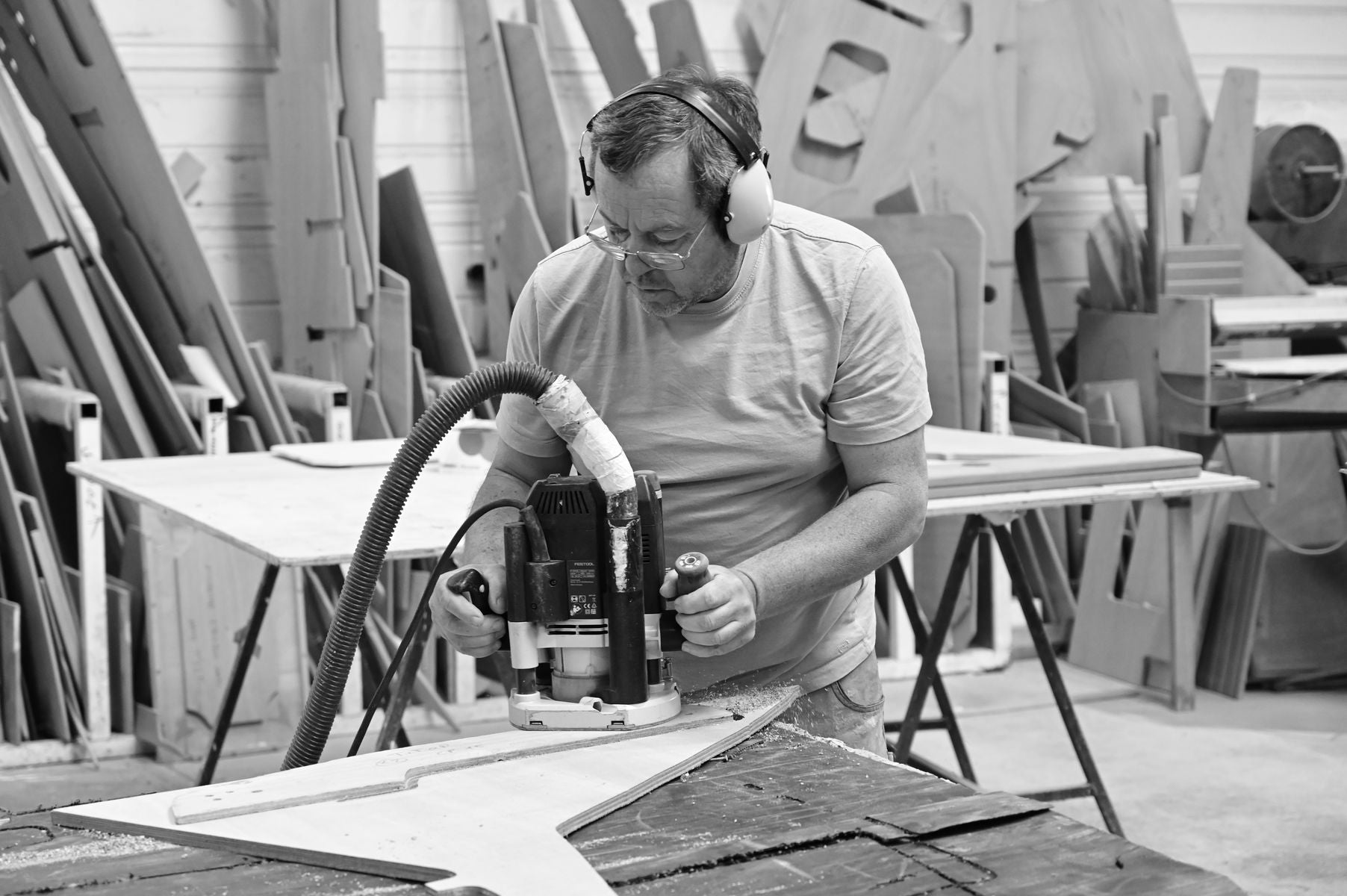
Wood workshop
Longitudinal and transverse cross sectional high quality , West epoxied marine plywood bulkheads are introduced to form the skeleton of the hull.
They are used not only to reinforce critical points, but also to secure accessories such as fuel tanks and bilge pumps...
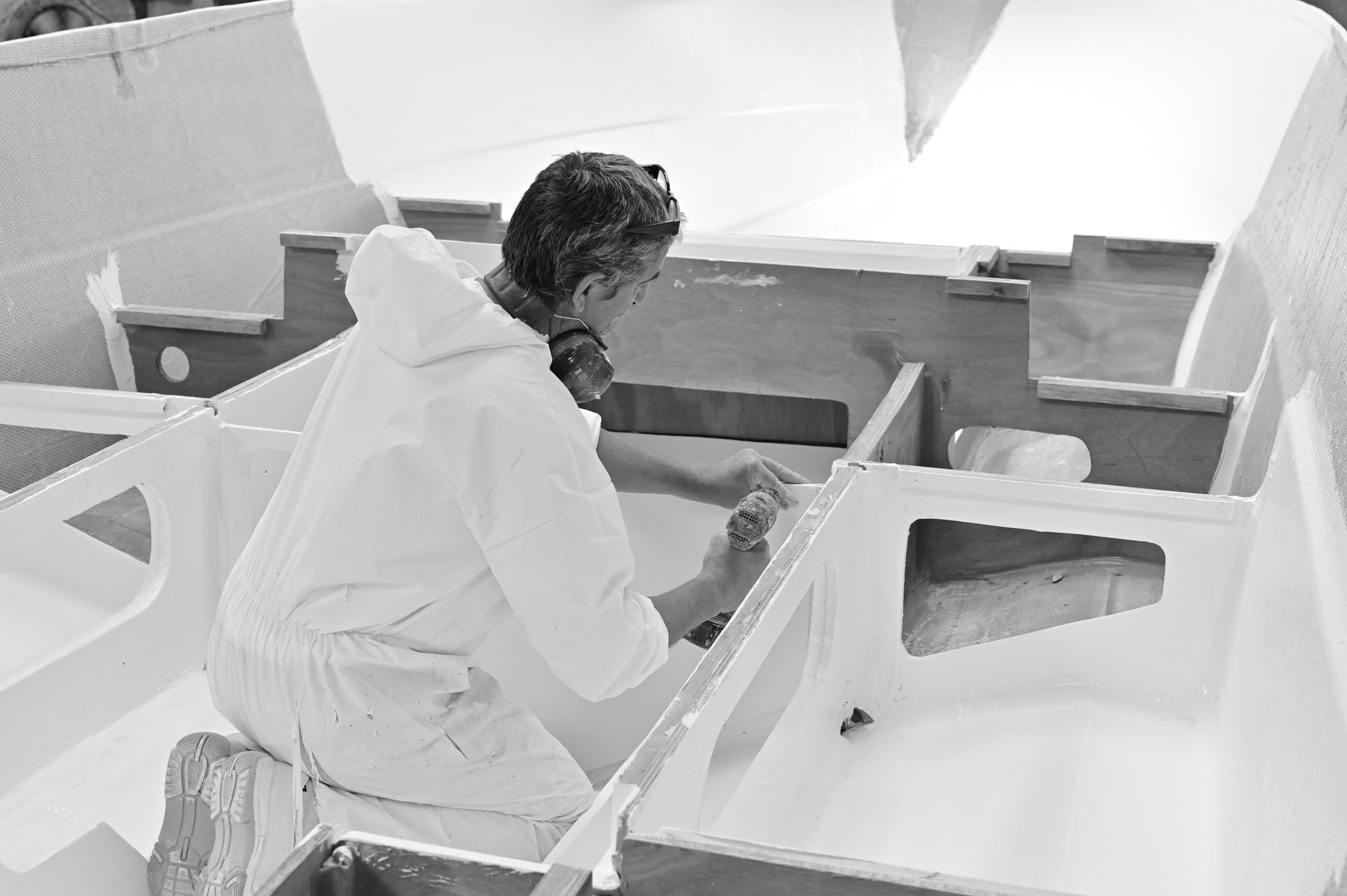
Laying internal bulkheads
Longitudinal and transverse members are first epoxied and then painted to form an incredibly strong, reinforced internal structure.
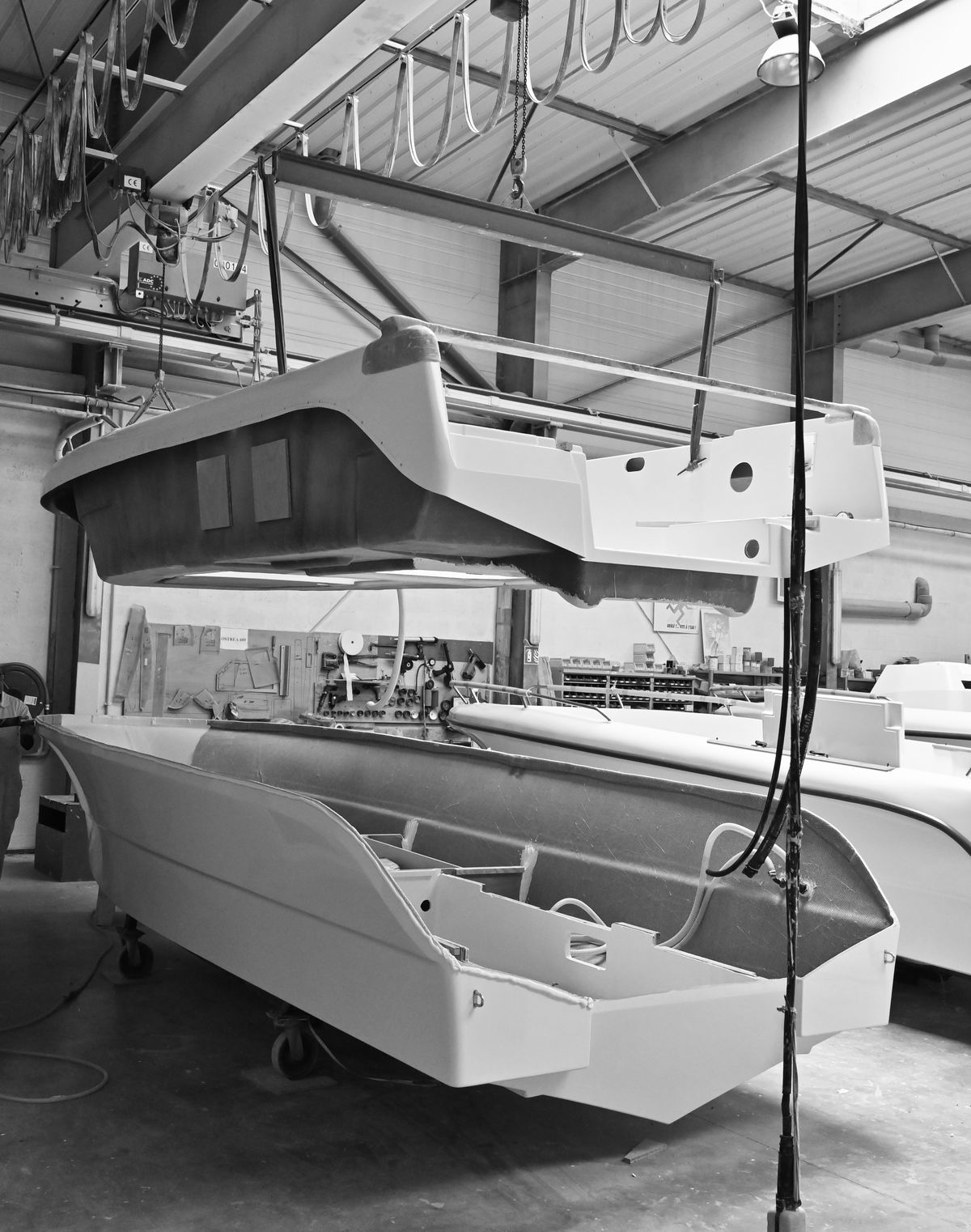
Boat Decking
Once the hull is finalised, all below deck equipment including furniture modules, power and water systems and wiring harnesses are all installed before decking:
With all the bulky or heavy equipment in place, the boat can be decked.